

Compare static and dynamic QR codes to choose the right type. Learn the key differences in editing, tracking, cost, and when to use each.
Static QR codes store data directly in the pattern. Dynamic QR codes store a short redirect URL that you can change anytime. That single difference affects everything: whether you can edit after printing, track scans, or update your content without reprinting.
Here's how to decide which type you need.
Static vs Dynamic QR Codes: Quick Comparison
| Feature | Static QR Code | Dynamic QR Code |
|---|---|---|
| Editable after creation | No | Yes |
| Scan tracking/analytics | No | Yes |
| Content stored | Directly in code pattern | On redirect server |
| Pattern complexity | Higher (more data = denser) | Lower (short URL = simpler) |
| Works offline | Yes (for text, WiFi, contacts) | No (requires internet) |
| Cost | Usually free | Usually requires subscription |
| Expires | Never | Depends on provider |
| Best for | Permanent content | Marketing campaigns |
What Is a Static QR Code?
A static QR code encodes your data directly into the pattern of black and white squares. Every character of your URL, phone number, or WiFi password is physically represented in the code itself.
Static QR codes work for:
- WiFi network credentials
- Contact information (vCard)
- Plain text messages
- Email addresses
- Phone numbers
- URLs you'll never change
Key Benefit
Static QR codes work forever with no ongoing costs. Once created, they never expire and don't depend on any external service.
How Static QR Codes Store Data
When you create a static QR code for https://example.com/my-page, each character gets encoded into the pattern. Longer URLs create denser, more complex codes with smaller modules.
This means:
- More data = larger code (or smaller modules at the same size)
- Long URLs may scan poorly at small sizes
- You can't change the destination without creating a new code
What Is a Dynamic QR Code?
A dynamic QR code encodes a short redirect URL (like qrc.gs/abc123) instead of your actual content. When someone scans, they hit the redirect server first, which sends them to your actual destination.
Dynamic QR codes work for:
- Marketing campaigns (where you need analytics)
- Content that might change
- Long URLs (shorter redirect = simpler pattern)
- A/B testing different destinations
- Temporary promotions
Key Benefit
Change where your QR code points anytime—even after you've printed 10,000 flyers. No reprinting required.
How Dynamic QR Codes Work
- You create a QR code that encodes a short URL:
qrc.gs/abc123 - That short URL redirects to your actual destination:
https://yoursite.com/campaign - When someone scans, they hit the redirect server, which forwards them
- You can change the destination anytime through your dashboard
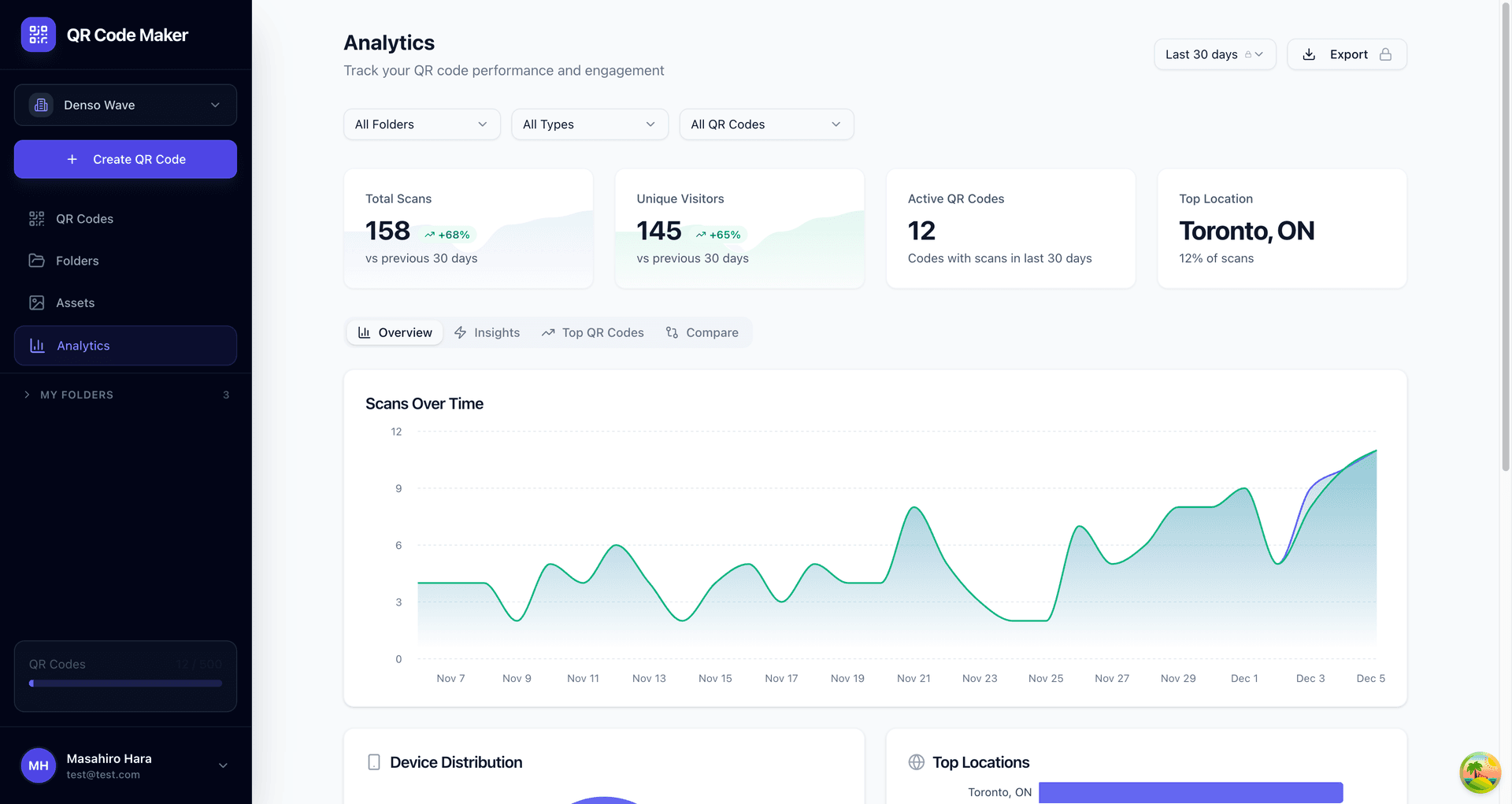
- The redirect server logs each scan (time, location, device)
When Should You Use Static QR Codes?
Personal Use
Birthday party invitations, wedding RSVPs, sharing your WiFi password—static codes handle these perfectly. You don't need analytics, the content won't change, and free is the right price.
Permanent Business Content
If you're printing QR codes on physical products that link to unchanging content (product manuals, warranty registration), static codes make sense. The content outlives any subscription.
Offline Functionality
WiFi QR codes, vCards, and plain text all work without internet access. The scanner extracts the data directly from the pattern—no server involved. Static codes are the only option here.
High-Volume, Low-Touch Use
Employee ID badges, equipment labels, inventory tracking—situations where you need many codes that each link to fixed content. For high-volume creation, our Bulk QR Code Generator lets you create thousands of codes from a spreadsheet.
Cost Consideration
Static QR codes are typically free forever. If you're creating codes you won't need to track or edit, don't pay for features you won't use.
When Should You Use Dynamic QR Codes?
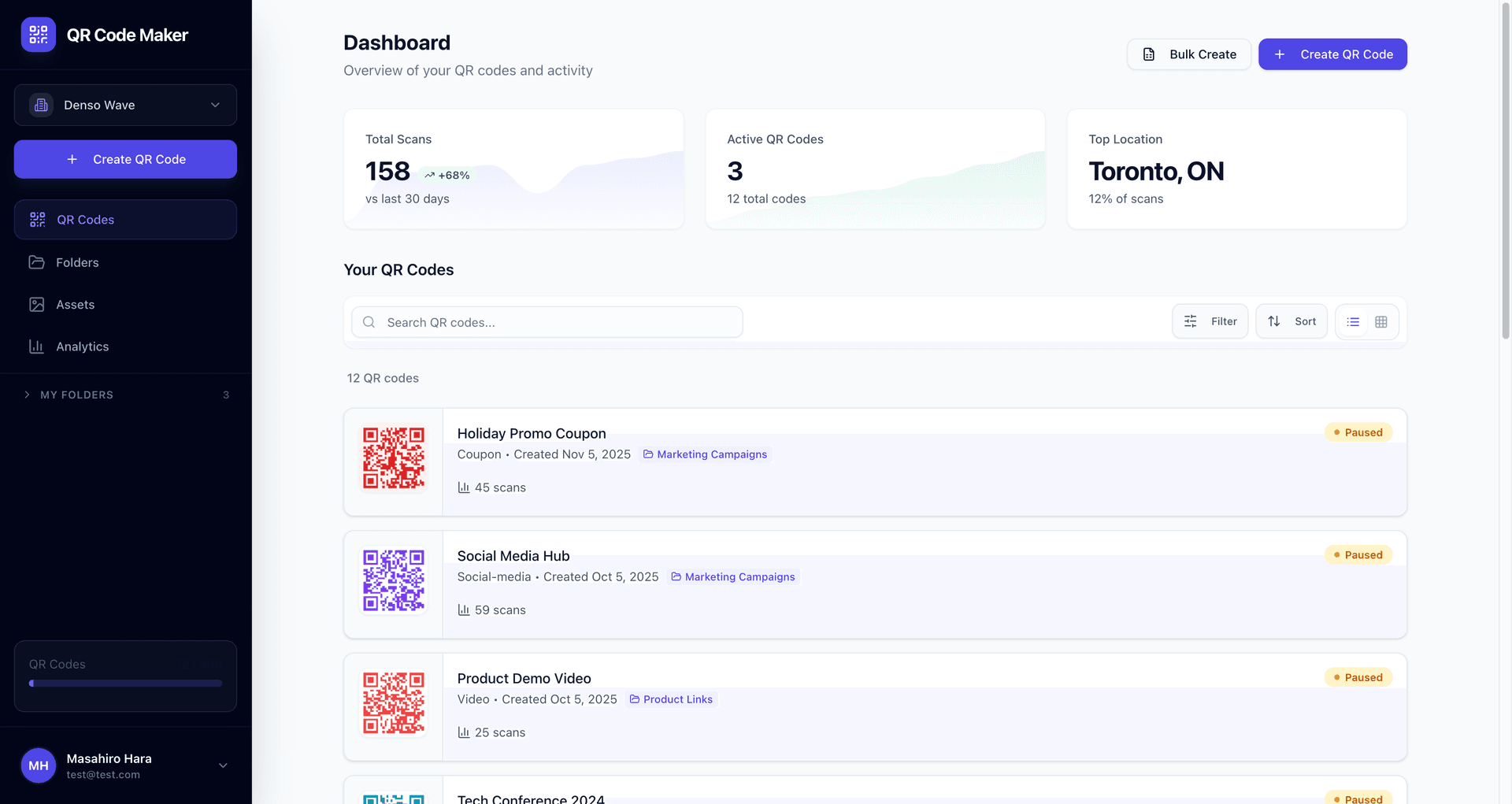
Marketing Campaigns
Any printed marketing material—flyers, posters, brochures, billboards—should use dynamic codes. You'll want to:
- Track performance: See how many scans, when, and where
- Fix mistakes: Catch a typo after printing? Change the destination
- Update promotions: Point to new offers without reprinting
- A/B test: Try different landing pages to optimize conversion
Content That Changes
Restaurant menus, event schedules, pricing pages—anything that updates regularly. Instead of reprinting codes, just update the destination.
Long URLs
A URL like https://example.com/products/category/item?utm_source=flyer&utm_medium=print creates a complex, dense QR code that may scan poorly. Dynamic codes keep the pattern simple regardless of final destination length.
Professional and Enterprise Use
If QR codes are part of your business operations, you need the analytics, management, and reliability that dynamic codes provide. The monthly cost is negligible compared to reprinting materials.
What Are the Hidden Costs of QR Codes?
Most QR code services offer free static codes but charge for dynamic codes. This makes sense—dynamic codes require ongoing server infrastructure for redirects and analytics.
But watch out for these traps:
Trial Expiration
Some services let you create "free" dynamic codes, then disable them when your trial ends. Your printed materials become worthless.
Red Flag
If a service offers "free" dynamic QR codes, ask what happens after the trial. At QR Code Maker, we offer a 14-day Pro trial (no credit card required). After the trial, excess codes are paused—not broken. They show an informational page until you choose which one to keep active on the free tier or upgrade.
Annual Billing Lock-In
Many services require annual payment ($180+ upfront) just to test their dynamic codes. That's a big commitment before you know if QR codes work for your campaign.
We offer true monthly billing—pay $9/month, cancel anytime. No annual lock-in.
Downgrade Penalties
What happens if you downgrade or cancel? Some services break your existing codes. Others delete your analytics data.
Our approach: your codes stay accessible even if you downgrade. Excess codes are paused and show an informational page—they don't 404 or break. You choose which code stays active on the free tier. We never break a link someone already printed.
How Do You Choose Between Static and Dynamic?
What Real Users Choose (QR Code Maker Platform Data, Q1 2026)
Our platform data confirms the pattern: 98% of URL codes are created as dynamic — users overwhelmingly want tracking and the ability to update destinations. Meanwhile, 93% of WiFi codes are static — users correctly recognize that WiFi credentials don't change and don't need analytics. The choice almost always comes down to one question: will this content ever change?
Use this framework to decide:
Choose Static If:
- ✅ Content will never change
- ✅ You don't need scan analytics
- ✅ Codes need to work offline (WiFi, vCard, text)
- ✅ You're creating for personal use
- ✅ You want zero ongoing costs
Choose Dynamic If:
- ✅ You might need to update the destination
- ✅ You want to track scan analytics
- ✅ You're running a marketing campaign
- ✅ Your URL is long or complex
- ✅ You need professional features (bulk management, team access)
Still Unsure?
Ask yourself: "What happens if I need to change where this code points after it's printed?"
- If the answer is "I'll just print new ones"—use static
- If the answer is "That would be expensive/impossible"—use dynamic
Can You Convert Between Static and Dynamic QR Codes?
Static to Dynamic
You cannot convert a static QR code to dynamic. The data is physically encoded in the pattern—there's no way to change it without creating a new code.
Workaround: Create a new dynamic code and reprint. Going forward, use dynamic codes for anything that might need updates.
Dynamic to Static
If you have a dynamic code and want to "freeze" the destination permanently, you can create a static code pointing to the same URL. But you'll lose tracking and editability.
This rarely makes sense. If you're paying for dynamic, you're paying for the features. Just keep using the dynamic code.
Static and Dynamic QR Code Examples
Static QR Code Use Cases
| Use Case | Content Type | Why Static |
|---|---|---|
| Business card | vCard contact | Works offline, permanent info |
| Product manual | PDF link | Content doesn't change |
| WiFi guest access | Network credentials | Works offline, no tracking needed |
| Personal website | URL | Permanent, no analytics needed |
Dynamic QR Code Use Cases
| Use Case | Content Type | Why Dynamic |
|---|---|---|
| Trade show booth | Lead capture form | Track scans, update form fields |
| Restaurant table tent | Menu PDF | Update menu without reprinting |
| Real estate sign | Property listing | Remove when sold, track interest |
| Magazine ad | Campaign landing page | A/B test, track ROI |
| Product packaging | Promo landing page | Rotate promotions seasonally |
Frequently Asked Questions
Do static QR codes expire?
No. Static QR codes encode data directly in the pattern—they work as long as the physical code exists. There's no server or subscription involved.
Do dynamic QR codes expire?
They can, depending on your provider. Some services disable codes when trials end or subscriptions lapse. At QR Code Maker, we never break existing codes—they continue redirecting even if you downgrade.
Can I track scans with a static QR code?
Not through the QR code itself. However, you can use UTM parameters in your URL (?utm_source=flyer) and track visits in Google Analytics. You won't see scan-specific data like location or device, but you'll see traffic.
Which type scans more reliably?
Dynamic codes typically scan better because they encode a short URL regardless of your actual destination length. Simpler patterns with larger modules scan more reliably, especially at small sizes or from a distance.
Can I have both static and dynamic codes?
Absolutely. Use static codes for permanent, offline-capable content. Use dynamic codes for marketing and anything that might change. Most QR code services support both.
What happens to my dynamic codes if I cancel my subscription?
This varies wildly by provider—and it's the most important question to ask before committing. Some break all your codes immediately. Others give a grace period. We keep your codes working; you just can't create new ones or access detailed analytics.
Can I convert a static QR code to dynamic?
No. Static codes encode data directly in the pattern—there's no way to change the underlying structure. You'll need to create a new dynamic code and reprint. This is why choosing the right type upfront matters.
Which type is more secure—static or dynamic?
Static codes are inherently more secure because the data is fixed and can't be redirected to a different destination. Dynamic codes are editable, which is powerful but means the destination could theoretically be changed. Choose a trustworthy provider for dynamic codes.
Make the Right Choice
Static vs dynamic isn't about which is "better"—it's about matching the tool to your needs.
Use static for: Permanent content, offline use, personal projects, zero ongoing cost.
Use dynamic for: Marketing campaigns, updateable content, analytics, long URLs.
When in doubt, consider: how bad would it be if you needed to change this code after printing? If the answer is "really bad," go dynamic.
For practical examples, see how restaurants use dynamic menu QR codes for constantly updating menus. Learn about QR code tracking and analytics for measuring campaign performance, or discover free QR code generators with no expiration.
Ready to create your first QR code? Start free with QR Code Maker—static codes are always free, and dynamic codes come with true monthly billing. No annual lock-in, no codes that break when you cancel.
Ready to create your QR code?
Free forever for static codes. Pro features with 14-day trial, no credit card required.

Irina Aguiar
·Content LeadIrina Aguiar leads content strategy at QR Code Maker, where she has written extensively on QR code technology, marketing, and business operations. Her work ranges from technical explainers on how QR codes are generated and how error correction works to practical guides on QR marketing, automation, and scan analytics — plus hands-on tutorials covering Python, Google Sheets, and Zapier integrations. She also publishes honest competitor comparisons and industry-specific playbooks for retail, real estate, hospitality, healthcare, and events.
More from Irina Aguiar →Related Articles
QRCG by Bitly Alternative: What Changed After the April 2026 Rebrand
qr-code-generator.com rebranded to QRCG by Bitly on April 20, 2026. Here's what changed for existing customers, what didn't, and how QR Code Maker compares.
Beaconstac Alternative: What to Know After the Uniqode Rebrand (2026)
Beaconstac rebranded to Uniqode in January 2024. Here's what changed for existing customers, what didn't, and how QR Code Maker compares on billing and cancellation policies.
Flowcode Alternative: Fair Billing for Small Businesses (2026)
Flowcode's Pro Plus is $25/month billed annually, and downgrading locks you out of most of your codes. Here's how QR Code Maker compares, with cited policies and user reviews.